
Two landscapes in one destination
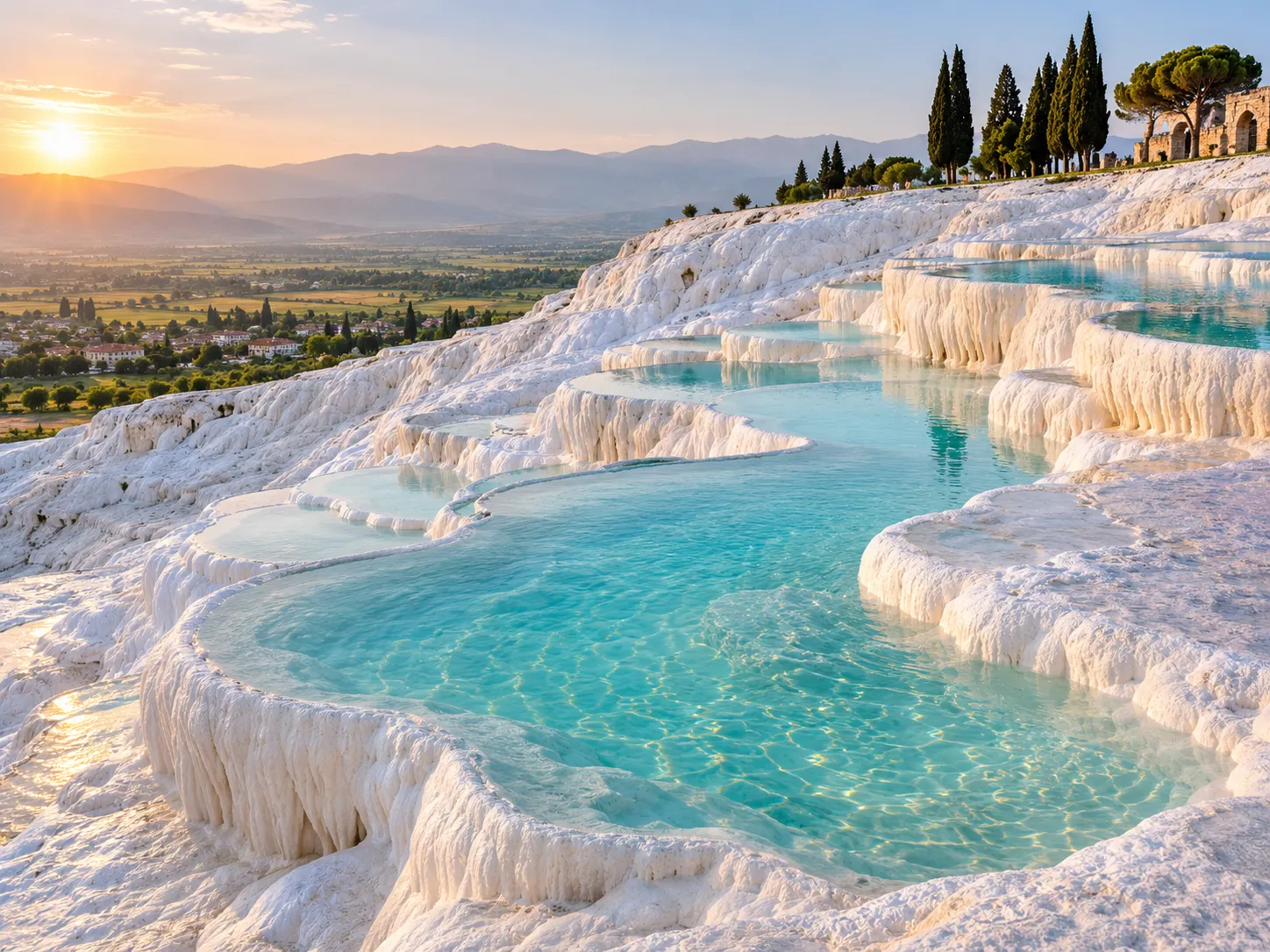
Pamukkale is often introduced through a single image: white terraces descending toward the plain. The image is striking, but it tells only half the story. Immediately above the mineral landscape is Hierapolis, an ancient city shaped by the same thermal setting. A good Pamukkale and Hierapolis tour moves between geology and human history rather than racing to a viewpoint and leaving. Begin with the relationship between them. Mineral-rich water created the travertine formations; people then built a settlement, baths and public places in this unusual environment. Seeing the two together makes the destination feel less like a photo stop and more like a place with a continuing story.
What makes the terraces white
UNESCO describes the terraces as deposits formed by calcite-laden waters from hot springs. As the water moves and minerals settle, the surface takes on the pale, stepped appearance that gave Pamukkale its name, often translated as “cotton castle.” The colour can shift with light, water and viewpoint. It is tempting to seek the exact angle of a photograph you have seen online, yet the more rewarding approach is to notice how the pools, ridges and open plain relate to one another. This is protected natural heritage. Follow the current visitor route and staff instructions; access to particular surfaces or bathing areas can change to protect the formations and manage water flow.
Walk Hierapolis as a city
The ruins of Hierapolis deserve time of their own. UNESCO identifies the theatre and necropolis among the cultural attributes of this World Heritage property, alongside remains from Greek, Roman and Byzantine periods. A guide can connect these places to the city rather than presenting them as isolated monuments. Think about the distance between public gathering spaces, burial areas and the thermal landscape. Not every traveller needs to cover every path: choosing a coherent walking route is more valuable than collecting a list of names. Stone surfaces, steps and open areas make comfortable shoes, drinking water and a realistic pace useful. Ask which parts are appropriate for your group before fixing the day’s route.
Decide what matters most before you go
A private Pamukkale day can emphasize landscape, archaeology or a balance of both. Tell your planner whether you would rather spend more time studying the ancient city, seeing the terraces from different perspectives or pausing for a relaxed meal. Families with children, travellers who prefer shorter walks and keen archaeology visitors may all enjoy the same destination through different routes. Share mobility needs early, including the ability to manage slopes and uneven stone. If a thermal pool experience matters to you, ask whether access, entry and time are actually available on your date. It should appear in the written offer as a confirmed inclusion or a clearly described option, not as an assumed part of every tour.
The journey is part of the day
Pamukkale sits in Denizli province, so travel time depends greatly on where you begin. A nearby stay makes a different day from a long road transfer or a flight-based visit from Istanbul. Do not treat a flight arrival, airport transfer and archaeological visit as though all three were a full sightseeing day. Ask the operator to map the sequence from your actual pickup point to the final drop-off, allowing for luggage, traffic, walking and a meal. If you are combining Pamukkale with Ephesus, decide whether one overnight stop would make the route more comfortable. The right answer depends on the wider itinerary, not on how many destinations fit in a headline.
Pair Pamukkale with Ephesus thoughtfully
Ephesus and Pamukkale offer a memorable contrast: an ancient urban landscape on the Aegean side and a mineral landscape with an ancient spa city inland. A combined private route can work well when the transfer day, hotel location and walking time are planned honestly. Give each destination a purpose. At Ephesus, follow the streets and public buildings as part of a larger city story; at Pamukkale, allow the geology and Hierapolis to explain one another. The two-day route is different from a short excursion from a single base. Ask which admission tickets, guided services, meals, accommodation and transfers are included, and which are priced separately. The written itinerary should make those distinctions easy to see.
Photograph without losing the place
The terraces can appear bright in strong light, while warmer light can reveal more texture in the ridges. You do not need to promise a particular sunrise or sunset view to make a good photograph. Leave time to look without a camera as well: the height above the plain and the scale of the archaeological remains become clearer when you pause. Keep to permitted routes and never move barriers for an image. A respectful visit also leaves space for other travellers to enjoy the same view. If photography is an important part of your trip, discuss likely light and walking priorities with the operator, but keep weather and site access as flexible parts of the plan.
Practical questions for a private tour
Before confirming a private Pamukkale tour, ask where the driver will meet you, how much time is planned at Hierapolis and the terraces, and whether the route includes a licensed guide. Confirm the language of guiding, the vehicle arrangement, entrance fees, optional thermal facilities, meal plan and the final drop-off. If the journey includes domestic flights, ask whether they are included in the price and who handles any schedule change. Published starting prices are only a planning guide; the final cost depends on your group and the services in the offer. Read cancellation and payment conditions before paying. Keep the agency contact and written itinerary available during the day so a change can be handled calmly.
A slower way to remember Pamukkale
The best souvenir of Pamukkale may be a clearer understanding of how water, stone and people shaped the same place over time. A hurried visit can reduce the white terraces to a background; a considered route gives both the natural formations and Hierapolis their proper scale. Choose a walking pace that keeps everyone engaged, make a sensible plan for transport and leave a little margin for discovery. For the heritage context, consult the UNESCO Hierapolis-Pamukkale listing and the official Turkish Museums information for the archaeological site. Check current access rules close to travel, because conservation needs and visitor arrangements can change. Then ask for a tailored written proposal that connects the destination to the rest of your Turkey journey.