
Start with the journey you want to feel
Planning a Turkey holiday becomes easier when you begin with the feeling you want to take home. Some travellers picture the ferry lights of Istanbul, some want the open skies and carved valleys of Cappadocia, while others are drawn to the marble avenues of Ephesus or the white terraces of Pamukkale. A private Turkey tour can connect all four, but the best route gives each place enough time to make an impression. Think about whether your priority is history, food, photography, coastline, nature or a slower rhythm. That answer is more useful than trying to collect every famous landmark in one list. The purpose of a considered itinerary is to turn Turkey travel into a sequence of moments that belong together.
How many days do you need in Turkey?
A first Turkey itinerary usually works best when it respects the size of the country. Istanbul deserves at least two full days for the Historic Peninsula, the Bosphorus and a neighbourhood or market chosen around your interests. Cappadocia is more rewarding with two nights, giving you time for a valley walk, a viewpoint and a flexible morning if weather changes. In western Turkey, Ephesus and Pamukkale can be paired, but the transfer time should be visible in the plan. A seven-day Turkey tour can introduce all four destinations at a lively pace; a ten-day Turkey tour allows more breathing room, better hotel choices and a second morning in a place you love.
Istanbul: the natural beginning
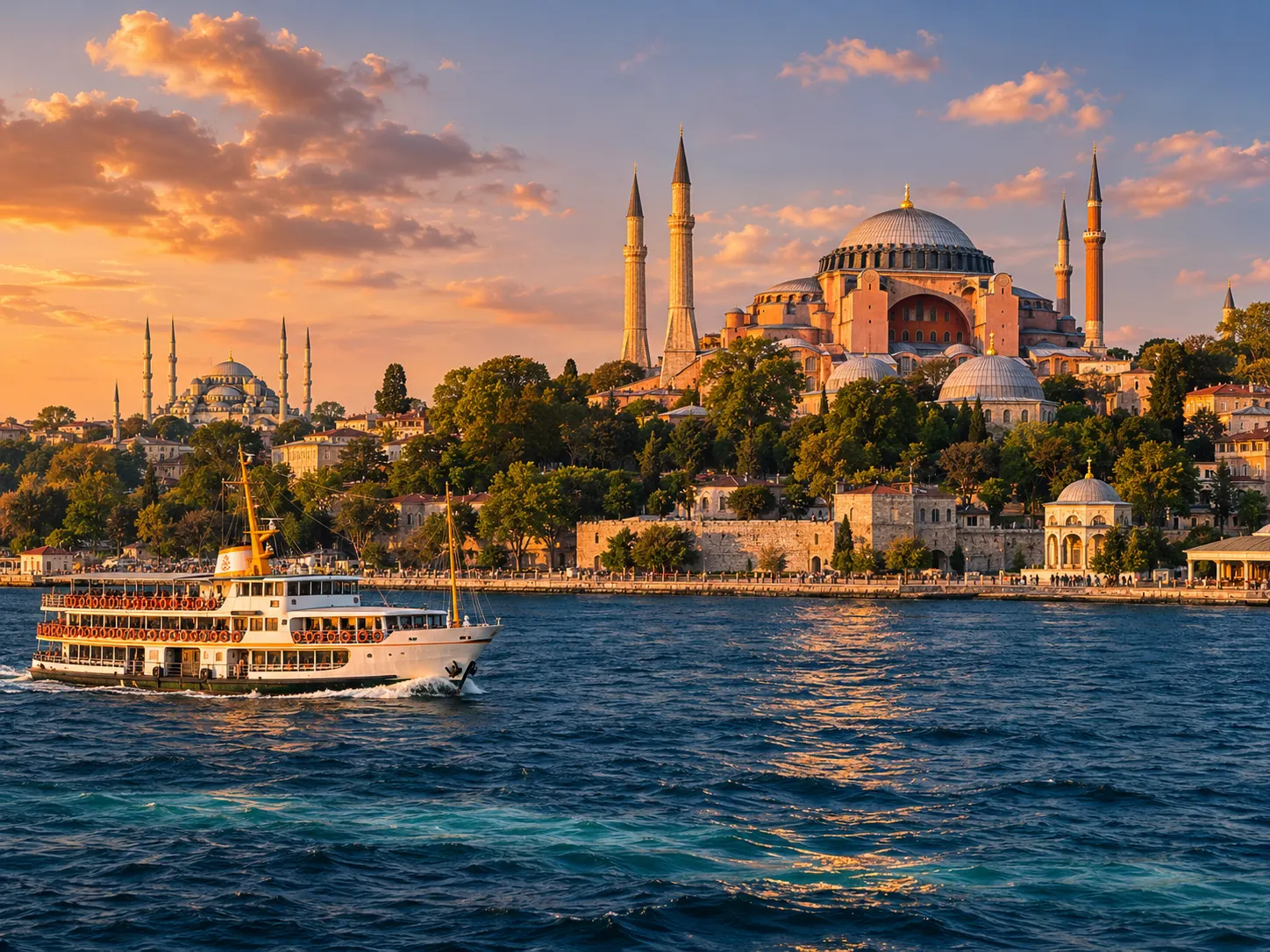
Istanbul is an evocative starting point because the city introduces several layers of Turkey at once. Begin around Hagia Sophia, the Blue Mosque area, the Basilica Cistern and the old streets leading toward the Grand Bazaar, then leave space for a Bosphorus ferry or a waterfront meal. The city is not only a collection of monuments. Its neighbourhoods, bakeries, tea gardens and ferry piers show how history and everyday life share the same view. A private Istanbul tour can be shaped around architecture, Ottoman history, contemporary food or photography. Your hotel location also matters: a thoughtful plan avoids turning every morning into a long cross-city transfer.
Cappadocia: landscape with a human story
Cappadocia changes the scale of the journey. The valleys around Göreme, Uçhisar and Avanos combine volcanic forms with churches, homes and paths shaped by generations of residents. A Cappadocia tour should not be reduced to a hot air balloon photograph, even though a sunrise flight can be memorable when weather and availability allow it. Walk through a valley, visit a small village or choose a viewpoint at a quieter hour. Cave and stone hotels vary considerably, so the written proposal should state the location and category rather than promising a generic cave experience. Cappadocia is also a place where a flexible schedule pays off.
Ephesus and Pamukkale: the western chapter
Ephesus offers a different kind of drama. The Library of Celsus is the celebrated façade, but the city becomes more meaningful when you follow the marble streets, theatre, fountains and public spaces that reveal how people moved through an ancient port. Comfortable shoes and sun protection are useful, as the site includes uneven surfaces and open areas. Pamukkale adds a bright mineral landscape above Hierapolis. Its travertine terraces are protected, and access rules can change, so a responsible Pamukkale tour follows current local guidance. Together, Ephesus and Pamukkale create a strong Aegean chapter for a Turkey cultural tour, especially when the route includes enough time for the journey between them.
Flights, transfers and the pace between places
Domestic flights can save time between Istanbul and Cappadocia, while private road transfers are often practical in the Aegean. Neither choice is automatically better. Flight schedules, airport transfers, luggage and hotel locations all affect the real sightseeing window. Ask for the connection plan in writing and make sure a travel day is not described as a full exploration day. A private Turkey travel service should explain who meets you, how long the transfer normally takes and what happens if a flight or site visit changes. This clarity protects the rhythm of the trip and makes the route easier to enjoy.
Build a personal Turkey tour
The most useful enquiry includes your preferred dates, number of travellers, arrival and departure cities, hotel style, walking pace and the experiences you value. Mention mobility needs, dietary requirements or a special interest such as biblical heritage, archaeology, cuisine or photography. The final written offer should identify the operating agency, transport, accommodation, guiding language, entrances, meals, optional activities, payment schedule and cancellation conditions. Starting prices are planning references until those details are confirmed. A route built around your actual priorities will usually feel more luxurious than a longer list of stops. Turkey rewards curiosity, but it also rewards leaving enough room to notice what happens between the landmarks.
Practical notes
Share your arrival airport, departure plans, preferred travel month and the number of nights you want in each region. Tell the team whether you prefer boutique hotels, cave rooms, a sea view or a central neighbourhood. Ask which services are included and which are optional, especially domestic flights, airport transfers, museum tickets, balloon flights and meals. If you are travelling with children or older guests, explain the walking pace and rest breaks that would make the days comfortable. A good Turkey itinerary is not measured by how many names fit on a page. It is measured by whether the connections feel calm, the stays feel well chosen and the places have enough time to become memories. Keep the written offer with the confirmed dates and conditions so every traveller knows what has been agreed. Check the final written proposal before making non-refundable arrangements, and keep the contact details of the operating team with your travel documents. This small step makes the experience clearer from the first enquiry to the journey home. It also gives every traveller a shared reference for timing and services.