
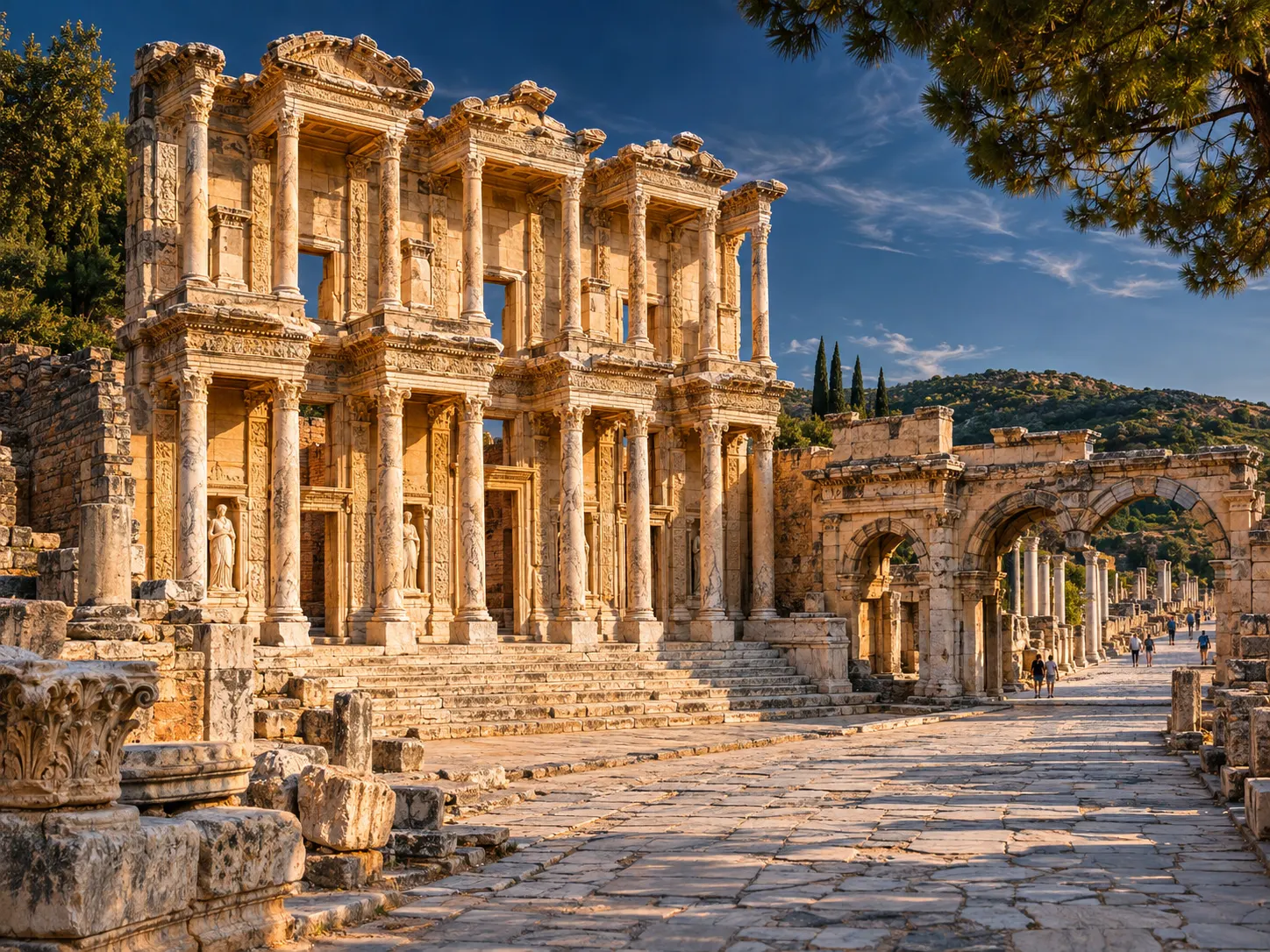
Ephesus is a city, not a single photograph
The Library of Celsus is one of the most recognisable monuments in Turkey, yet it is only one view into Ephesus. The ancient city unfolds along streets, terraces and public spaces that explain how a major Aegean centre worked. Begin with the famous façade if you wish, then slow down. Look for the scale of the Curetes Street, the gateways, fountains and theatre. Notice the relationship between the hillside and the harbour direction. An Ephesus tour becomes richer when the guide connects architecture with movement, trade, ceremony and domestic life. The goal is not simply to take a photograph; it is to understand why this place still feels inhabited by its past.
The marble streets and the rhythm of public life
Walking Ephesus is an experience of changing surfaces and changing views. Marble paving, columns and fragments make the route feel monumental, while details such as drainage, shop fronts and inscriptions bring the city back to human scale. The Curetes Street once connected important civic and religious buildings, and the slope means that every turn opens a new perspective. A private Ephesus tour can pause at the places that interest you most instead of following a rigid checklist. Visitors who enjoy archaeology may want more context about construction and restoration; families may prefer shorter explanations with time for questions and shade.
The Library of Celsus and what surrounds it
The Library of Celsus was built as a monumental civic building and memorial, and its surviving façade rewards a careful look at columns, statues and layered stonework. It is tempting to stop there, but the surrounding streets explain the library’s position within the city. Continue toward the gates and public routes, then consider how visitors would have arrived, gathered and moved on. The best Ephesus travel guide balances the iconic view with the less photographed spaces nearby. Early or later visits may offer gentler light, and the exact timing should be planned around transport, season and the comfort of your group.
The Great Theatre and the harbour road
The Great Theatre gives Ephesus a sense of scale that photographs rarely capture. Its seating rises above the open space, while the ancient road toward the harbour suggests how performances, commerce and civic life were connected. The site is exposed in places, so comfortable shoes, water and sun protection are practical essentials. Depending on your interests, a route can include the theatre, the marble street, the Library of Celsus and selected terrace houses or nearby heritage sites. A shore excursion from Kuşadası must also keep a clear return margin for the ship. Timing is part of the history experience because it lets you walk without rushing.
Ephesus beyond the main archaeological zone
The wider Selçuk area adds depth to an Ephesus itinerary. The Basilica of St John, the House of the Virgin Mary and the Ephesus Museum each offer a different way to read the region’s ancient and religious heritage. Not every visit belongs in every day. A private tour can choose one additional stop according to your interests, mobility and available hours. Şirince can add a village atmosphere and local food, while the museum helps visitors see smaller objects that give context to the monumental ruins. Ask how long each transfer takes and whether entrance fees or optional stops are included in the written proposal.
When to visit and what to bring
Spring and autumn often provide comfortable conditions, while summer visits require a thoughtful plan for heat and shade. The ancient surfaces are uneven and some areas have limited shelter. Wear stable walking shoes, carry water and bring sun protection. Photography is rewarding in soft morning or late afternoon light, but the best time for your group may be determined by a port call or hotel transfer. Your guide can adjust the sequence so that the most exposed sections are not placed at the hardest part of the day. Accessibility needs should be shared before booking, because the archaeological terrain cannot be treated like a flat museum.
A clear Ephesus travel plan
Before confirming an Ephesus tour, request a written description of the meeting point, vehicle, guide language, entrance tickets, optional stops, lunch arrangements, total price and cancellation terms. Cruise guests should provide the ship name, docking date and all-aboard time. Travellers from Izmir or Bodrum should confirm the road distance and realistic time on site. A clear plan protects the visit from rushed promises and helps you choose the right depth. Ephesus is at its most memorable when the famous library becomes an invitation to notice the whole city: its roads, theatre, hillside, harbour, communities and the stories that connect them.
Practical notes
Ephesus is protected heritage, so a thoughtful visit respects marked paths, restricted areas and the instructions of site staff. Do not climb fragile ruins or remove stones, and keep voices considerate when other visitors are listening to a guide. Photography is welcome where permitted, but a responsible Ephesus tour also pays attention to the people living and working in Selçuk today. Supporting local guides, restaurants and small producers helps the wider destination benefit from tourism. Ask about the best entrance for your route, the shade available at different points and the time needed for the return journey. These practical questions do not reduce the magic of the place; they make it possible to experience the Library of Celsus, theatre and marble streets with care, context and enough time to look closely. Check the final written proposal before making non-refundable arrangements, and keep the contact details of the operating team with your travel documents. This small step makes the experience clearer from the first enquiry to the journey home. It also gives every traveller a shared reference for timing and services.