
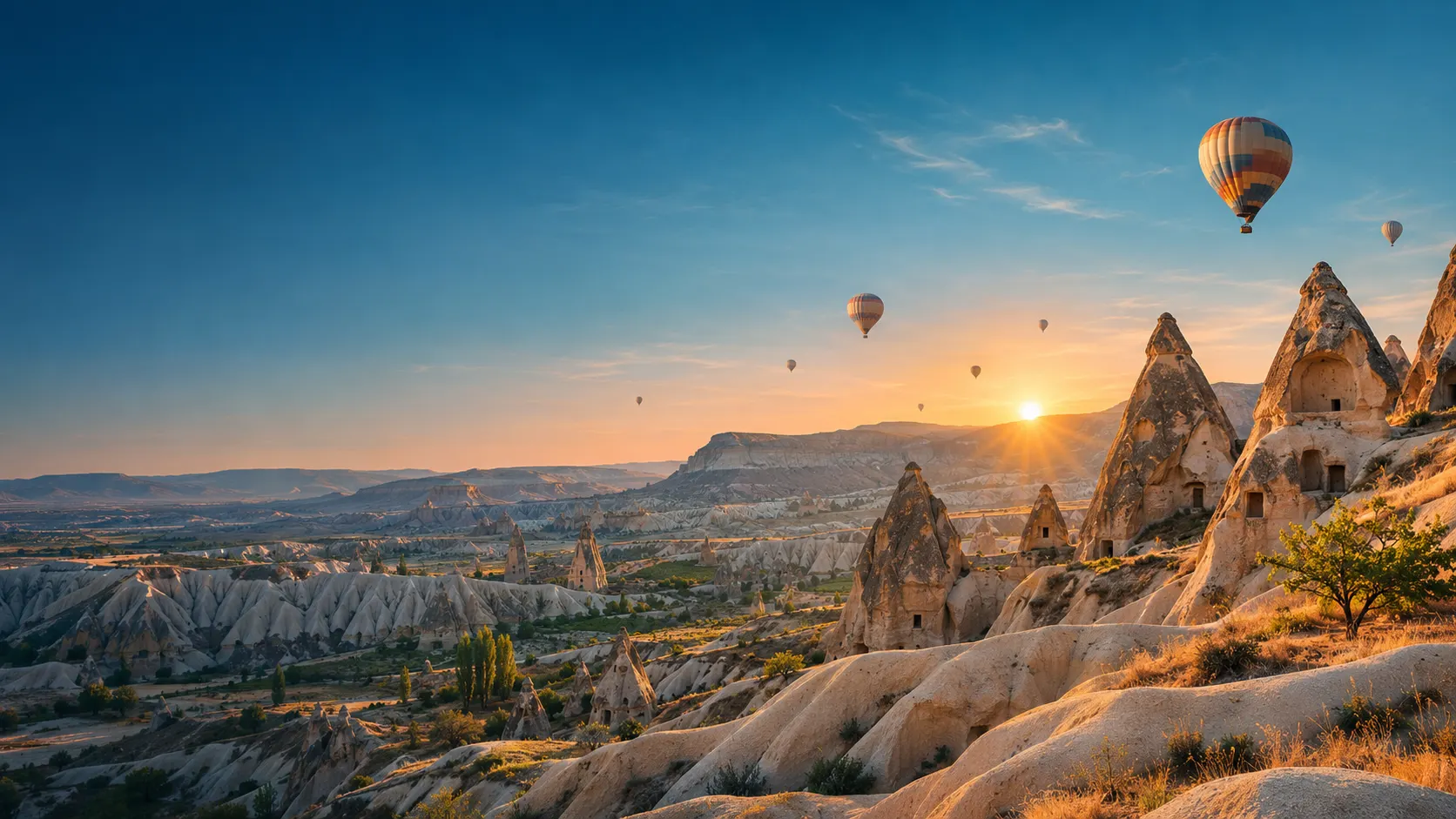
A first view of Cappadocia
Cappadocia is easiest to understand as a living landscape rather than a single attraction. In central Anatolia, volcanic rock has been shaped by erosion into ridges, valleys and pinnacles that travellers often call fairy chimneys. The protected heritage area around Göreme, Nevşehir, Ürgüp and Avanos also carries evidence of human settlement, worship and craft. That combination is what makes a Cappadocia tour feel different from a conventional sightseeing stop: the landscape is dramatic, but the story is also about people adapting homes, churches and paths to the stone around them. A considered private Turkey tour gives you time to notice both layers. Instead of rushing between viewpoints, choose a route that balances a valley walk, a cultural visit, a village pause and a comfortable evening.
Göreme and the rock-cut heritage
Göreme is a natural base for exploring the region because the valleys and open-air heritage sites sit close to one another. The Göreme Open Air Museum includes rock-cut churches and monastic spaces with painted decoration, and the official museum information describes the area as an important setting for the development of monastic education. A visit is more rewarding when the guide explains how the rooms, chapels and paths relate to the wider landscape. Look closely at the scale of the entrances and the way light changes inside the rock. The experience is quieter when you allow time for a single church or viewpoint instead of treating every stop as a photograph. Access rules and conservation instructions should always be followed.
Choose a valley for the way you travel
Cappadocia is made up of different valleys, and the best choice depends on your interests and mobility. A gentle viewpoint may suit travellers who want wide landscapes without a long walk. A longer trail can reveal changing rock colours, small passages and a closer sense of the terrain. Some routes are more exposed, while others include uneven steps and loose surfaces. A private Cappadocia guide can suggest a sequence around the season, light and walking pace, but the final route should be confirmed after discussing conditions. Comfortable shoes, water, sun protection and a light layer are useful throughout the year. The destination rewards looking up, slowing down and leaving space for an unexpected turn.
The sunrise question
Hot-air balloon flights are closely associated with Cappadocia, but a balloon ride is an optional experience rather than a guaranteed part of every itinerary. Weather, operating permissions, capacity and the provider’s decision all matter. Ask for current availability and the cancellation or rescheduling terms before treating a flight as essential. Travellers who do not fly can still enjoy the early morning atmosphere from a terrace or viewpoint, when the valleys gradually catch the light. A responsible Cappadocia travel plan never promises a flight without checking the conditions. It also avoids presenting a balloon photograph as the whole destination. The quiet before breakfast, the changing colours on the rock and the first sounds from the villages can be just as memorable.
Underground towns and the human landscape
The wider heritage property includes underground towns such as Kaymaklı and Derinkuyu, along with troglodyte villages and rock-hewn sanctuaries. These places show how communities used the geology for shelter, work and worship over long periods. An underground visit can involve narrow passages, low ceilings and stairs, so it is important to discuss comfort and mobility before adding it to a route. You do not need to visit every famous site to understand Cappadocia. One well-chosen underground town, followed by time in a village or local workshop, often creates a more balanced day. The region’s history becomes easier to remember when it is connected to the practical lives of people who shaped and inhabited the rock.
Avanos, food and the pace of a day
Avanos adds a different mood to a Cappadocia itinerary, with the Kızılırmak river, pottery traditions and a more everyday sense of place. Local food can become part of the route without turning the day into a checklist. Ask for a breakfast or lunch that fits your dietary needs, and leave time to sit rather than only stopping for a photograph. The region’s hotels also vary widely: some are in busy centres, some sit above valleys and some use restored stone rooms. A written offer should name the property category and location so expectations are clear. The most comfortable Turkey holiday plans treat evenings as part of the experience, not simply as a place to sleep between excursions.
Plan connections with care
Many travellers combine Cappadocia with Istanbul, Ephesus or Pamukkale. Domestic flights can shorten the distance, but airport transfers, luggage and departure times still shape the day. A road journey offers a different view but may take longer than a map suggests. Ask who meets you, how the transfer is arranged and what happens if a flight schedule changes. A seven-day Turkey itinerary can include Cappadocia as a central chapter; a longer route gives you more room for weather changes, a second valley and an unplanned café. The best route is not the one with the most stops. It is the one where the connections leave enough energy to experience each destination.
A responsible Cappadocia checklist
Cappadocia is protected heritage and a fragile natural environment. Stay on marked paths where required, do not climb delicate formations, avoid touching painted surfaces and follow the instructions of museum staff. Choose local guides and businesses that treat the landscape with care. Before booking, share your dates, walking pace, interests, dietary needs and any mobility considerations. Ask the written proposal to identify transport, accommodation, guiding language, entrance tickets, optional balloon arrangements, meals, payment terms and cancellation conditions. This level of detail makes a private Cappadocia tour feel calm and transparent. Use the official UNESCO and Turkish Museums pages for background, and check current local rules before travelling. The result is a more respectful and more rewarding way to discover Cappadocia.
Practical notes
Check the current museum guidance, walking conditions and operator terms before arranging non-refundable services. Keep the written itinerary and local contact details with your travel documents so every traveller can follow the confirmed plan. Check the final written proposal before making non-refundable arrangements, and keep the contact details of the operating team with your travel documents. This small step makes the experience clearer from the first enquiry to the journey home. It also gives every traveller a shared reference for timing and services.